The month when someone counts the money out loud
Before the board deck goes out, Wednesday
Finance Gross burn is six hundred a month. Net is three-fifty since the price change went through in July.
Founder And on the bank balance that gives us —
Finance Fourteen months. Eleven if the two hires land in October.
Board member Fourteen is the honest number only if nothing improves. Does the plan reach profitability inside it, or does it not.
Finance On the current plan, by the third quarter of next year. Just about.
Board member Then say that in one sentence at the front, because that is the first thing the room will want.
Founder The revenue slide says four point two million.
Finance It says four point two run-rate. Six hundred of that was the migration project for one customer, which will never happen again. Contracted, it is three point six.
Board member Put both on the slide, with the word on each. Somebody will ask, and it is better if you asked first.
Founder Retention is the good news. Existing accounts pay a hundred and eighteen for every hundred a year ago.
Finance By revenue, yes. By number of accounts we lost nine of forty-one — all of them small, all of them self-serve.
Board member Nine of forty-one is a story, not a footnote. And what does the enterprise segment cost to acquire now.
Finance Fourteen months of gross profit to earn it back. Self-serve is five.
Board member So the segment you are losing is the one that pays for itself first. Show it per segment, not blended. Growth plus margin — where does that land.
Finance Twenty-five and minus thirty. Five.
Board member Then lead with the fourteen months and the plan, and let them find the five.
One spreadsheet, and every number in it has two versions: the one that is true and the one that is flattering. The hour goes on choosing which of them goes on the slide.
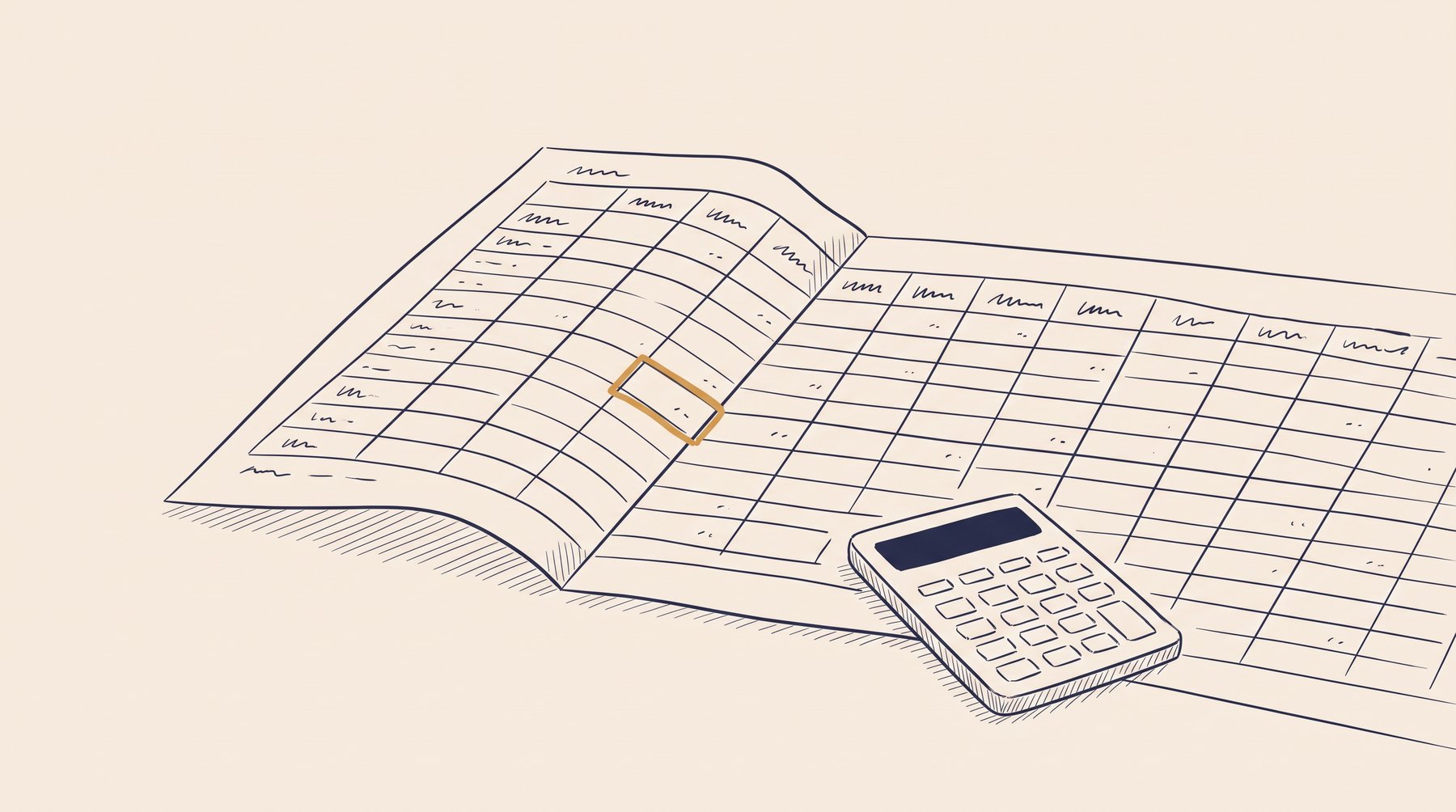
The money conversation runs from what leaves to what comes back
It opens with what goes out of the account each month and how long that leaves. Then it moves to revenue, and to the difference between money contracted and money multiplied up. It closes on the customers themselves: who stays, who leaves, and how long it takes for one of them to pay for the trouble of finding them.
Burn rate
The monthly rate at which a company consumes cash, quoted gross or net depending on who is asking for it.
Diligence wanted burn rate month by month for the last eighteen months.
The first number anyone asks for and the one most often quoted without saying which version it is.
Net burnBurn neto
Cash out minus cash in: the amount by which the bank balance actually falls each month.
Net burn dropped to $300k after the price increase.
The version the bank statement agrees with, and the reason two people can both be right about the same month.
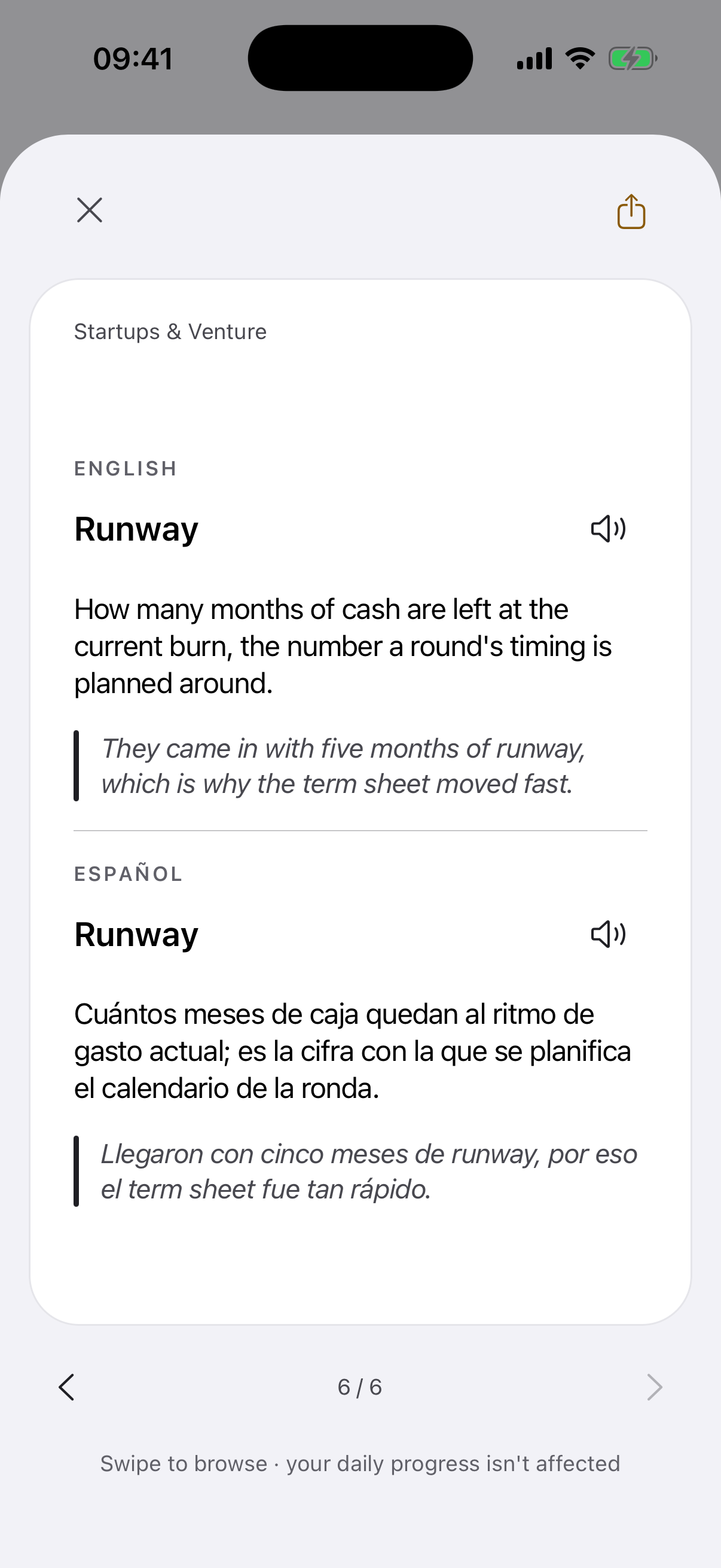
Runway
How many months of cash are left at the current burn, the number a round's timing is planned around.
They came in with five months of runway, which is why the term sheet moved fast.
The number a fundraise is timed against. Everything in the plan is really an argument about this one.

Default alive
A description of a company whose current growth and spending would reach profitability before its cash runs out.
On this plan we are default alive by Q3.
The question underneath all of it, and one of the few in venture with a yes or a no. It is a property of the plan, not of the mood in the room.
Burn multiple
Net cash burned in a period divided by the net new recurring revenue added in the same period.
A burn multiple of 3.5 is what they got stuck on in the partner meeting.
Money spent against revenue gained: the ratio investors reach for when growth alone stops being an argument.
ARR
Annual recurring revenue: the yearly value of subscription contracts currently in force.
We crossed $4M ARR in June.
The headline of every board deck, and the number most often stretched.
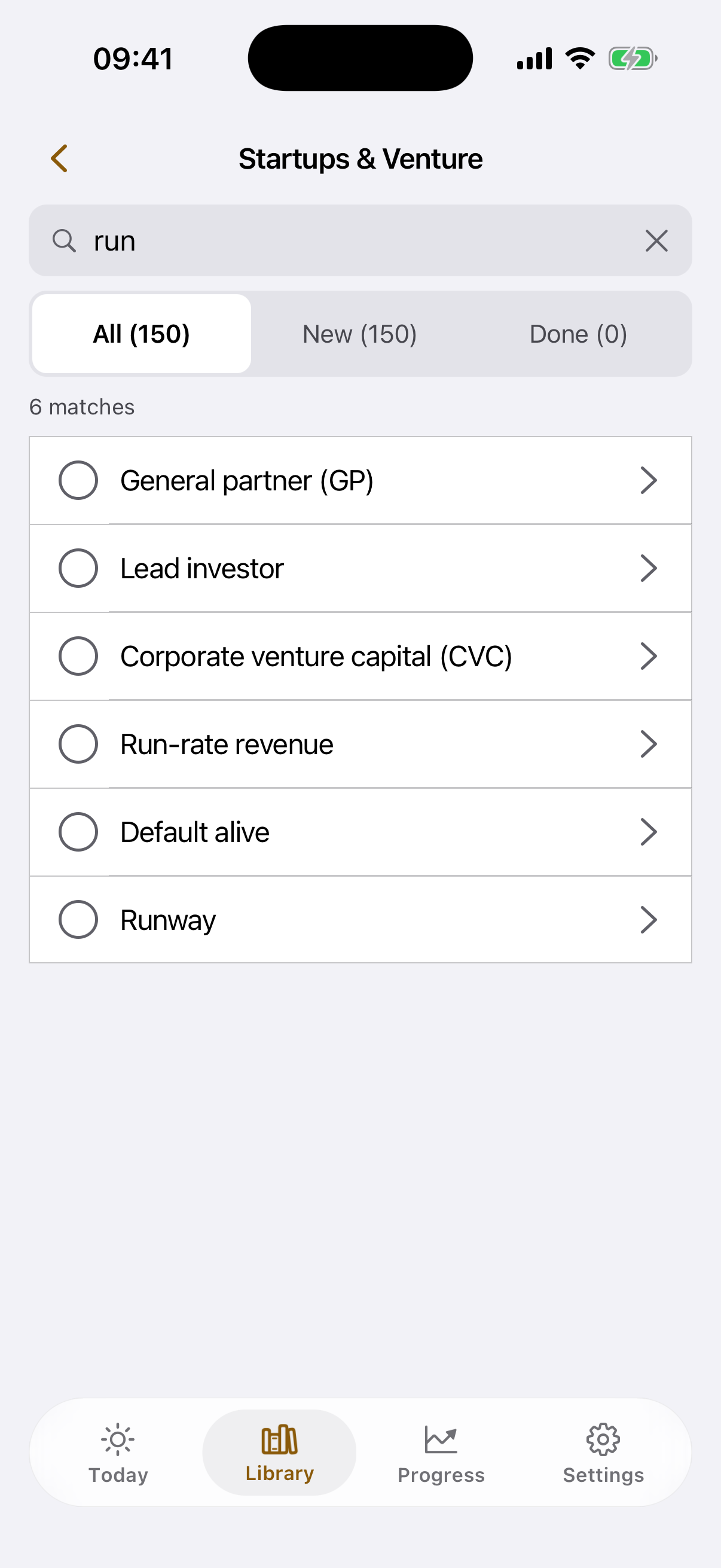
Run-rate revenueRun-rate
A yearly figure produced by multiplying up a recent period's revenue, including one-off sales that will not repeat.
That is run-rate, not ARR, and half of it was a single consulting project.
What the stretch is called once someone names it. Multiplying a good month by twelve is a forecast wearing a metric’s clothes.
Net revenue retention (NRR)NRR
What a cohort of existing customers pays a year later, counting upgrades, downgrades and churn together.
NRR is 118%, so the base grows even with no new logos.
The one line that can grow a company with nobody new arriving. Past a hundred it hides a great deal, including departures.
Logo churn
The share of customer accounts lost in a period, counted by number of customers rather than by revenue.
Logo churn is high but it is all small accounts.
What the revenue version hides. Counting customers instead of money turns a footnote back into a story.
CAC payback periodPayback del CAC
How many months of gross profit from a customer it takes to earn back what it cost to acquire them.
CAC payback is fourteen months in the enterprise segment.
Where sales and finance stop agreeing: one segment is worth chasing at twice the price, the other stops being worth it at all.
Unit economics
The revenue and costs attached to one customer or one order, used to see whether growth adds or destroys value.
Show me unit economics per city, not the blended number.
The habit of looking at one customer instead of the whole company. The blended figure is where a bad segment goes to hide.
Rule of 40Regla del 40
A rough software benchmark in which revenue growth rate plus profit margin add up to 40 or more.
They are at 25% growth and minus 30% margin, so nowhere near the Rule of 40.
A rough test, treated as a verdict. Investors quote it because it survives being said in one breath.

The board reads it on Friday
Every word on those slides will be picked up and turned over, and the questions will arrive in the same vocabulary. The one answering will be you.
Questions and answers
What about the rest of the venture words?
On the deck page, all 150. These twelve are the ones a single board review uses.
Why is there Spanish on the card?
Board decks are written in English almost everywhere, and argued about in Spanish in the room. Both forms sit on one card, so "burn" and "quema" are not two different conversations.
Where do the definitions come from?
From the Startups & Venture deck — the same cards as in the app.
Next quarter the same slides will need a different twelve.
The Startups & Venture deck holds the rest — in the app they come a few a day.